
“A reflective call to action for individuals, organizations, and humanity as a whole.”
“The book will no doubt serve as a useful manual for organizations aiming to drive meaningful change.”
— Kirkus Reviews
AVAILABLE WORLDWIDE · PAPERBACK · HARDCOVER · EBOOKWho is this for?
-
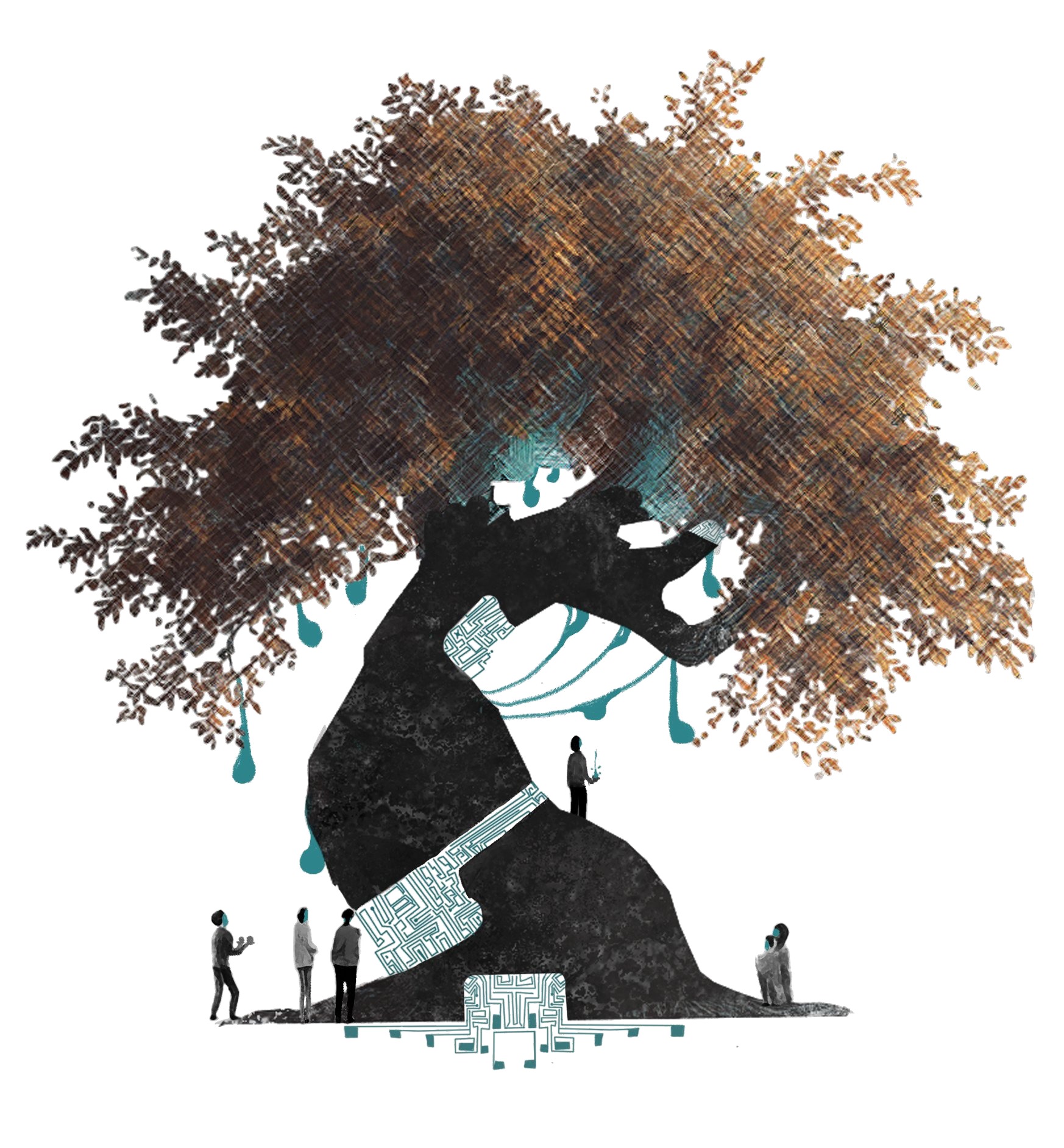
You have an extraordinary capacity to contribute, trapped in structures that diminish what you could offer. For the worker made a casualty of a system optimized for the wrong outcomes. For the student graduating into industries AI is reshaping overnight. For the entrepreneur who needs infrastructure, not inspiration. For the parent wondering what kind of world their children will inherit. This is the code for moving from wage dependency to ownership, from isolation to collective intelligence. You were never meant to be the afterthought of someone else's system. You're the architecture.
-
55% of employers who made AI-driven redundancies say those decisions were wrong. The gap between your AI goals and your outcomes isn't a technology problem — it's an organizational architecture problem. Technology moves at existential velocity. Your operating system doesn't. The 90% Code is the upgrade: from reaction to systemic readiness, from heroic decision-making to distributed intelligence.
-
Quarterly cycles optimize for ninety days. Political cycles optimize for four years. The Haudenosaunee governed across seven generations. From Nordic parental leave to Costa Rica's constitutional redirection to Porto Alegre's participatory budgets — the evidence for governing across interconnected systems already exists. The 90% Code integrates systems stewardship, ethical foresight, Indigenous governance, and cooperative economics into a single architecture for governing beyond the next election cycle.
-
From Mondragon's worker-owned university to Buurtzorg's self-governing teams to cooperative economics across four continents—the evidence for building systems that leave more capacity than they consume already exists. The 90% Code offers frameworks, diagnostic tools, and applied case studies for regenerative action—building collective intelligence across classrooms, organizations, and communities.
-
You're building raw intelligence and deploying it into legacy, centralized hierarchies. Optimization without structural evolution just accelerates systemic failure. Build for collective agency, not just automated efficiency.
WHAT THIS BOOK GIVES YOU
How do we move from concentrated power to human-AI collective intelligence—and build distributed abundance?
The 90% Code is a new operating system for rewriting power in the AI era—combining collective intelligence with the economic, democratic, and trust infrastructures needed for a more human-led future.
Diagnose why concentrated authority fails under distributed complexity
Build the five capacities of collective intelligence
Reimagine economic, democratic, and trust infrastructure
Collective intelligence in action: lessons from ancient systems, modern organizations and real-world movements.
Use practical tools including The 90% Code framework and the AI Trust Score
The 90% Code System
Five capacities. Three infrastructural shifts. One operating system for collective intelligence.
Capacities develop humans, infrastructures distribute power.
The 90% Code is an operating system for governing complexity without concentrating power.The central question of this moment is not what a single brilliant mind can do. It is what many minds can do together. This was always the more important question. AI has only made it unavoidable.Meet the author
Sonali Sharma is a systems strategist and the author of The 90% Code.
She argues that hero-driven leadership is collapsing under technological complexity — and that the AI era belongs to organizations able to operate as distributed systems. Across two decades, she has worked across public systems, social enterprise, education, and innovation ecosystems, including building circular micro-factories with Indigenous artisans in South India and directing strategy for British Columbia’s technology commercialization programs.
Her current work focuses on collective intelligence and AI trust: how organizations distribute power, make decisions, and adopt AI without eroding human capacity and agency. The 90% Code is part of a wider body of work aimed at building systems that run on the capacity of the many, not just the decisions of the few.
A BUILDER. NOT A PUNDIT.SHE HAS BUILT THE DISTRIBUTED SYSTEMS SHE WRITES ABOUT—AND LED THE CONCETRATED ONES SHE CRITIQUES. THE END OF THE HERO.
THE RISE OF US.
The 90% Code — Rewriting Power for the AI Era
Available now at Amazon · Barnes & Noble · FriesenPress · Kobo
Frequently Asked Questions
-
The 90% Code is now available worldwide in paperback, hardcover, and eBook formats through major retailers, including Amazon, Barnes & Noble, Indigo, Kobo, and FriesenPress.
Signed copies are also available directly through this website.
-
Neither, exactly.
It is a book about power, collective intelligence, and the systems we need for the AI era.
AI makes the problem more urgent, but the underlying issue is structural: we are trying to govern distributed complexity through institutions built around concentrated authority.
The book moves across leadership, organizational design, economics, democracy, and AI governance because those systems are connected.
-
A way to diagnose why concentrated authority breaks under complexity, five capacities for building collective intelligence, and a framework for redesigning the economic, democratic, and trust infrastructures around us.
The book also includes two applied tools: The 90% Code System Diagnostic for organizations and The 90% Code AI Assessment Framework for AI systems.
-
The AI Trust Score is a quick diagnostic for examining your relationship with the AI systems you use — particularly around judgment, agency, transparency, and trust.
It is designed to make AI governance tangible: not just “Is this model safe?” but What is this system doing to human capacity and decision-making?
You can take the assessment directly through the site.
-
My talks sit at the intersection of collective intelligence, AI, power, and systems redesign.
Current themes include:
From Hero to System — building collective intelligence that outperforms any hero
Trust as AI Infrastructure — why AI adoption fails when human judgment and agency are ignored
Two Futures in One Room — concentrated intelligence versus distributed abundance
The Failing Math of Concentrated Authority — why some problems cannot be solved harder, only redesigned
These are the same core conversations developed across the book and my current work.
-
A workshop is a focused session designed to help a team explore a specific question, build shared language, and apply one or more elements of The 90% Code to their context.
A Lab engagement goes deeper. It is a facilitated systems-design process where we examine how authority, information, incentives, decision-making, and AI currently operate — and redesign parts of the system together.
Think of a workshop as learning and application.
A Lab is diagnosis and redesign. -
Yes.
The book includes tools designed for practical use, including the System Diagnostic for organizations and the AI Assessment Framework for AI systems.
Teams can use the tools independently, or bring me in for a workshop or Lab if they want facilitated application.
For commercial training, certification, or adapting the frameworks into a paid offering, please contact me first.
-
Yes — actively. The 90% Code is built on the premise that distributed power needs coalition, not a single author voice. Collaborations with practitioners, researchers, ecosystem organizations, and institutions working on adjacent questions are welcomed. If you have something in mind, reach us with a short context on who you are, what you're building, and what you're imagining a collaboration might look like. Visit Contact page to view various ways to reach us,
-
The 90% Code is available worldwide through major retailers, including Amazon, Barnes & Noble, Indigo, Kobo, and FriesenPress.
You can also purchase a personally signed paperback or hardcover directly through this website.
Visit the Get the Book page to explore purchasing options.
-
The free strategy session is a short exploratory conversation to understand the challenge you’re working on, where the system may be getting stuck, and whether there’s a useful fit with my work.
We might look at questions such as:
Where is authority or decision-making becoming a bottleneck?
Where is AI creating friction, mistrust, or loss of agency?
Is the issue really a people problem — or a design problem?
Would a workshop, diagnostic, or deeper Lab engagement be useful?
It’s not a free consulting session or a full solution design. The goal is to clarify the problem, identify the right next step, and see whether working together makes sense.
-
Yes.
Workshops are designed around the specific context, challenge, and audience rather than delivered as a fixed off-the-shelf program.
Depending on the need, a workshop might focus on:
collective intelligence
redesigning decision-making
AI trust and human agency
distributed ownership and accountability
diagnosing the Hero Model
applying The 90% Code System Diagnostic or AI Assessment Framework
The format can range from a focused leadership session to a larger cross-functional workshop. The design starts with the problem you’re trying to solve, not with a predetermined deck.